
10 tips to get the message, even in the deep
WiFi isn't water proof, and with the exception of extremely low frequency and high power, radio communication is not possible more than a few inches below the surface. Optical is a good option, but only about as far as one could visibly see the ROV (often less than an arms length in ports and rivers). Acoustic is reliable, but too slow for video, and still of limited range. Communication is going to be over a cable called a "tether" nearly always. Here are some tips for getting data to/from the ROV:
- Tethers less than 500m are Unshielded Twisted Pair (UTP) conductors.
- VDSL is typically better beyond 300m tether lengths and up to 1km.
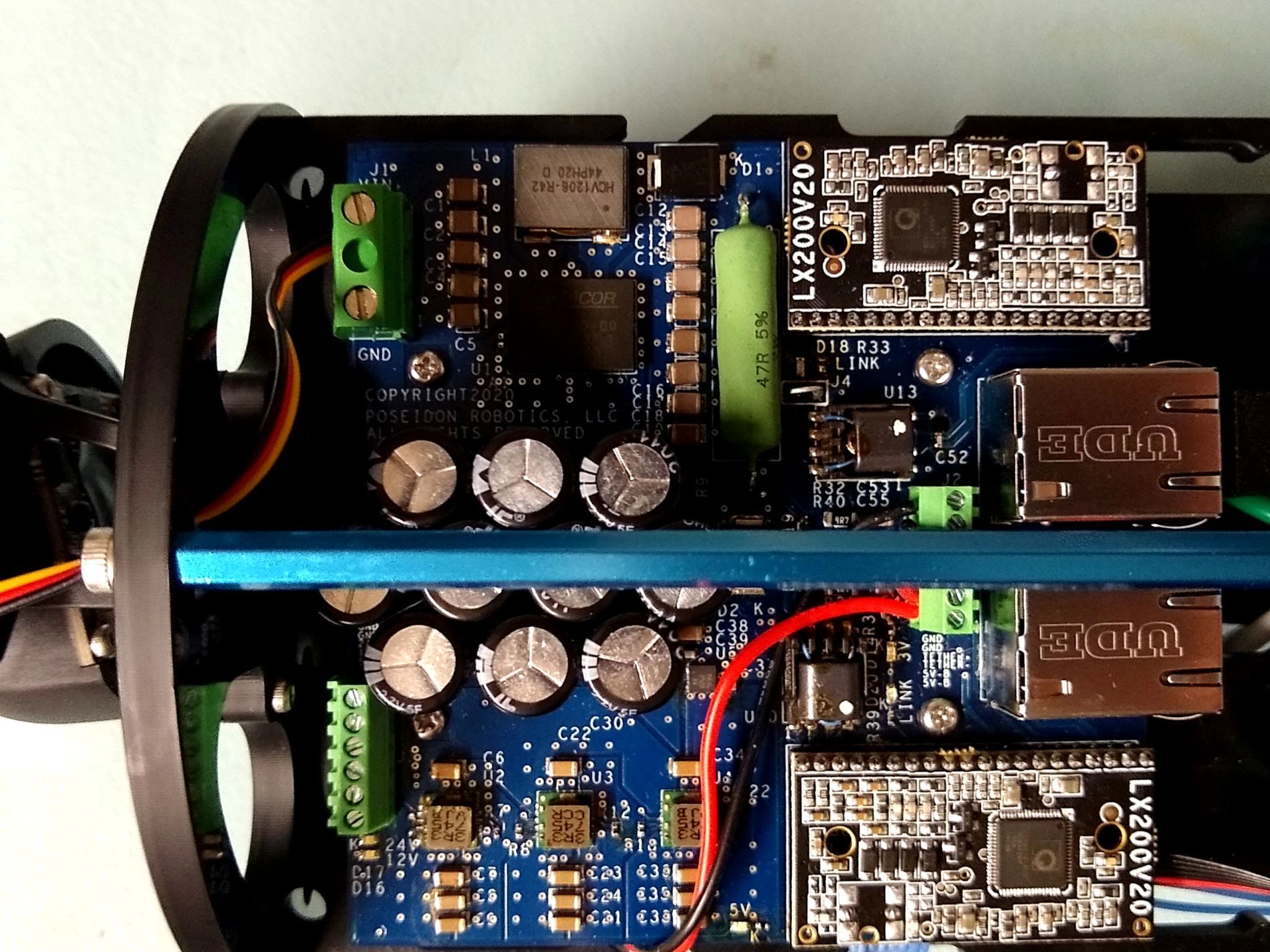
- HomePlug Ethernet extenders are simple and low cost (LX200V20 in photo).
- 3 or more HomePlug modules can be used on the same line to add ports.
- Use good filtering to minimize noise around the modules frequencies.
- Beware "cross-talk" if trying to use multiple UTP and sperate modems in the same tether, it usually won't work.
- RS485 can be used on a spare UTP without much trouble (good for sonar).
- Beyond 1km, Fiber is only viable option, and data is nearly unlimited (10G+)
- Fiber is easier than most think, but it has a learning curve and is more $.
- RS485, RS422, and some differential video formats can be driven over UTP or Coax directly up to ~300m. This used to be common in small ROVs.
BONUS: Ethernet is good, but many devices REQUIRE RS232, USB, HDSDI, dedicated TTL signals, and some sonars use an Ethernet physical layer, but are incompatible with TCPIP/UDP. Also, so devices require almost no latency and will not tolerate changing latency. For these reasons, many larger ROVs still use custom modems, with near zero latency FPGA based multiplexers on a Fiber backbone. Pay attention to the equipment that might be needed in the future.