
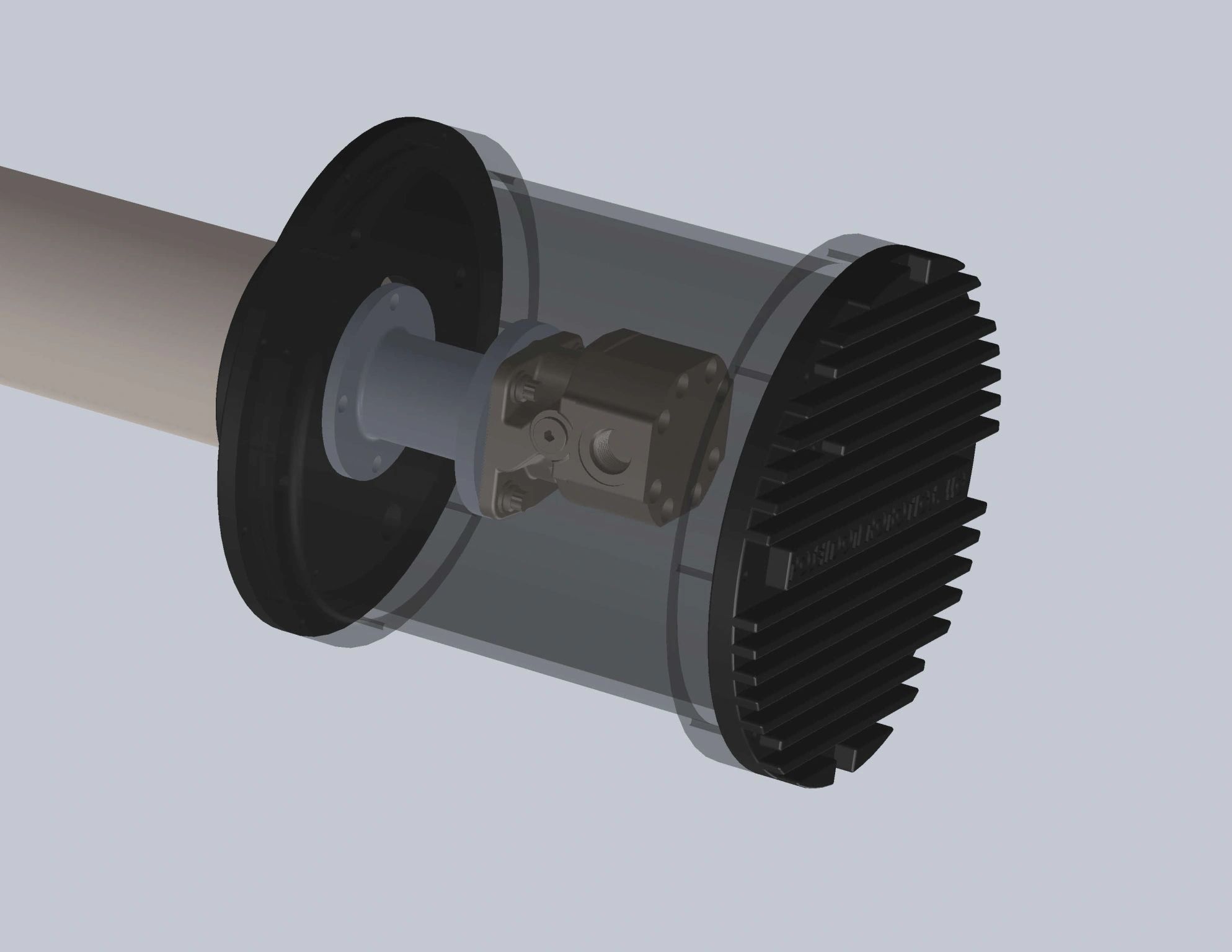
10 tips when designing with fluids in mind:
- Use for high speed shaft seals (i.e. thrusters).
- Common for large electronics from 1,000m to full ocean depth.
- Select the cleanest oil that will work, and consider spill mitigation.
- Add slight positive pressure compensation via a "Compensator". Typically 300-700mBar.
- Compensator volume must accommodate full range of operating temperatures. Typically 0C in the deep ocean to 50C on deck in the sun. Have enough room so it won't ever vent in the ocean. Calculate volume delta and use about 20% of total oil volume in the compensator as a starting point.
- Always have an emergency pressure relief valve to prevent dangerous pressure build up (typically happens when deck testing).
- Be careful around hyraulic systems, such as valve pack enclosures; if a valve seal breaks, hoses and vents should be able to vent the added high volume/pressure of fluid safely.
- Place "fill" "bleed" ports around the housings to allow air to be vented from the system, and oil drained when needed. Consider how the system will sit inside the ROV.
- Add view ports "windows" using Acrylic or similar material to see the quality of the oil.
- Keep electronics out of low points to allow small amounts of water ingress to settle and be removed without damaged.
Bonus tip - for some small compensated volumes, a compensator can sometimes be avoided. Consider using a clear flexible lid such as "Clear PVC" and allow the lid to handle the change in volume with temp/pressure.