
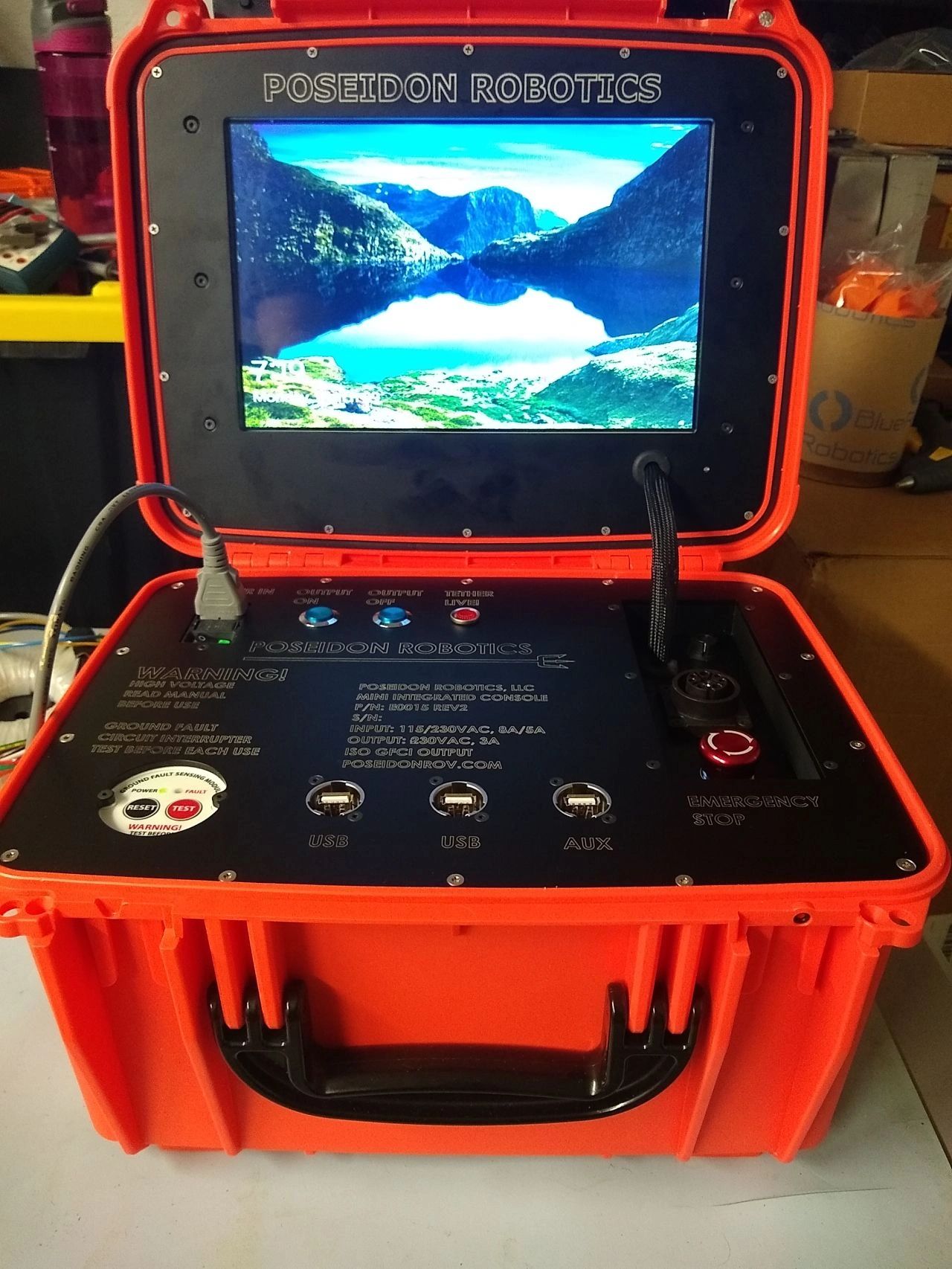
10 tips to prevent electrocution when powering ROVs
Electrical safety around water might seem odd, but it is both possible to put electricity in water, and reasonably safe if done correctly. Here are 10 tips to get started, but please seek professional advice when entering this field for the first time:
- It "take two to tango" always use isolated transformers/power supplies in the design of the surface system. If neither of the power wires are connected to Earth in any way, an operator must touch both wires simultaneously to be electrocuted. Swimming and touching one damaged wire would do nothing.
- Always have a BIG RED EMERGENCY STOP button in an obvious place.
- Use an incoming fuse, and outgoing fuses on each power conductor.
- "Earth leakage" or "Ground Fault Interrupter" are required on AC systems.
- "Line Isolation Monitor" is required in DC systems.
- Any exposed metal on the surface supply must be grounded to earth.
- A warning light ("TETHER LIVE" in the photo) to indicate power is on.
- Just like home appliances, live sockets are always female to prevent arcing.
- Add an indicator LED on stored energy devices (filter caps on the PCB).
- Always test the safeties, and always remind users to test them with labels.
Bonus tip: 5mA (.005A) will hurt, >30mA starts to immobilize a person, causing them to drown, and around 100mA my be fatal almost instantly. Our Lanai ROV console shown here outputs 3,000mA so even 1% lost to the water is unacceptable.