
10 Tips for seeing FROM the Abyss
- Cameras are the most important sensor on the ROV, select with care.
- Bandwidth may limit the available options for tethers/telemetry.
- For copper tethers <300m, PAL/NTSC/Compressed HD, <3 cameras.
- Fiber tethers can handle any model, and lots of them, but some to consider are HD IP, HDSDI, 4k, 8k, GigiE, and other low/no compression/low latency. Tether length is no longer a problem, even 10km or more.
- Camera to screen latency should be less than 200 milliseconds for general use, and less than 100milliseconds for manipulator work or precision flying.
- Ambient light is best, but there isn't much, so light sensitivity is important.
- ROV lights should be placed as far from the camera as possible.
- Image enhancement software and photogrammetry can be useful tools, so use good quality cameras and low compression where possible.
- Record everything, all the time, or you'll miss valuable data/big fish.
- Don't stress about color temperature, diffusion, etc. The ocean is a hard place to film.
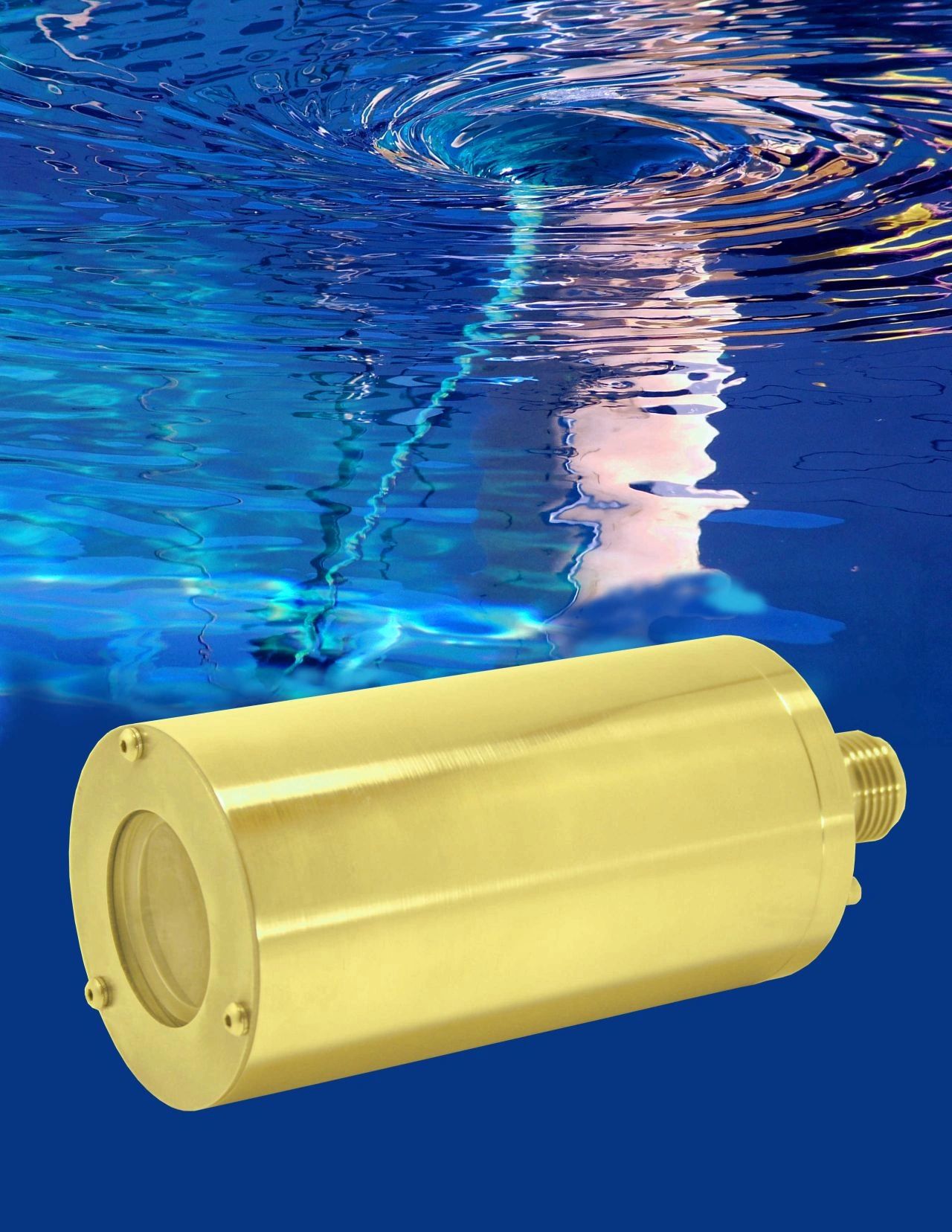
The camera in the photo is one we made custom in 2012 for a 2,400m dive in the Mediterranean, with a Sony HD "block camera" and HDSDI converter. The window is sapphire and the housing stainless steel.